A measurement of 5 centimeters is equivalent to 1.9685 inches. Many people frequently ask "how wide is 5 cm" when working on technical, design, or household projects that require precision. Understanding this metric distance is essential for anyone dealing with international standards or basic daily measurements.
MeasurementsNovember 9, 2026
5 cm Is 1.9685 Inches: A Simple Conversion Guide
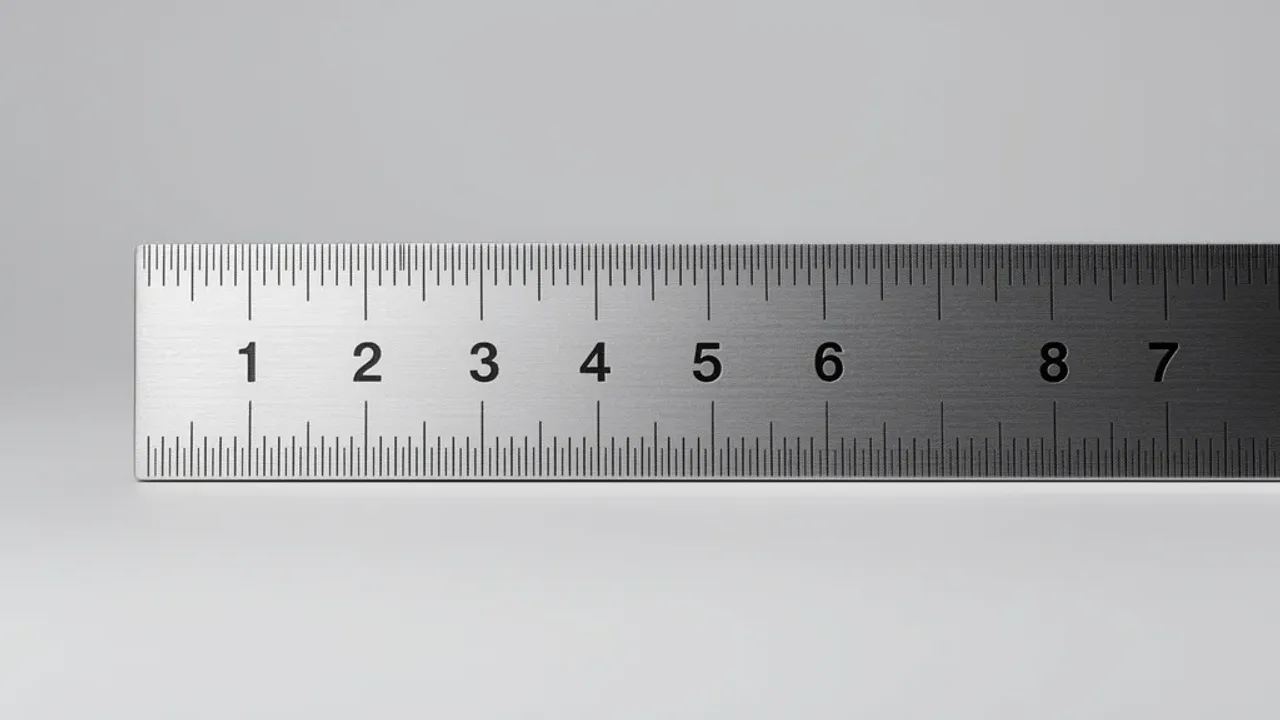 AI-generated image
Key Takeaways:
- Five centimeters is exactly 1.9685 inches.
- This length is equivalent to 50 millimeters or 0.05 meters.
- Two standard credit cards side by side help visualize this width.
- Metric units remain the global standard for consistency in engineering.
Visualizing 5 Centimeters
Metric measurements are straightforward and logical. While 5 centimeters might seem like a small distance, it is a common increment used in technical drawings, craft projects, and manufacturing. If a person wonders "how wide is 5 cm" in a practical, physical sense, they should consider that it is roughly equivalent to the width of two standard credit cards placed side by side. It is a very specific, consistent length. To ensure accuracy, always use a calibrated ruler rather than relying on visual estimation alone.
The metric system is designed for ease of use. Because it operates on a base-10 system, moving between units is simple. It is a precise length. Use your tools wisely.
- Always use a high-quality, reliable measuring tape or ruler.
- Verify the starting point at the zero mark on your tool.
- Carefully align the edge of the object with the measurement markings.
- Check your readings from a straight-on angle to avoid parallax errors.
The Conversion Table
Understanding how different units relate to one another is vital for accurate work. Below is a comprehensive breakdown of how 5 centimeters translates across various common measurement systems.
| Measurement Unit | Equivalent Value for 5 cm |
|---|---|
| Inches | 1.9685 inches |
| Millimeters | 50 millimeters |
| Meters | 0.05 meters |
| Feet | 0.164 feet |
| Yards | 0.0547 yards |
Practical Applications in Daily Life
- Marking materials: Use a pencil to mark the exact 5-centimeter length on wood or fabric.
- Estimating size: Compare the distance against small household items like coins or stationery.
- Technical specifications: Apply these conversions when reading international hardware or product manuals.
- Drafting: Use the 5-centimeter increment to maintain consistent spacing in blueprints or sketches.
In many professional fields, such as interior design or mechanical engineering, maintaining exact dimensions is non-negotiable. Whether you are cutting a piece of trim or measuring a gap for a new appliance, knowing the exact conversion is the first step toward a perfect fit. It is a simple task. Accuracy matters.
Understanding Metric Standardization
The centimeter is a fundamental unit of length in the metric system. It is defined as one-hundredth of a meter. Because the meter is the base unit of length in the International System of Units (SI), the centimeter serves as a globally recognized scale. This standardization ensures that technical plans, manufacturing components, and scientific data remain consistent across international borders. When someone asks "how wide is 5 cm", they are tapping into a system used by the vast majority of the world to maintain order in trade and science.
The beauty of the metric system lies in its simplicity. You do not need complex fractions to understand the scale. Everything is divisible by ten. It makes calculations much faster.
Frequently Asked Questions
How many inches are in 5 cm exactly?
There are exactly 1.9685 inches in 5 centimeters. This precise conversion is necessary when working with high-tolerance projects that require both metric and imperial measurements.
Is 5 cm equal to 50 mm?
Yes, 5 centimeters is equal to 50 millimeters. Because there are exactly 10 millimeters in every centimeter, the math remains simple and consistent for any user.
What is 5 cm in meters?
A length of 5 centimeters is equal to 0.05 meters. This is easily calculated by dividing the centimeter value by 100, reflecting the decimal nature of the system.
How can one visualize 5 cm without a ruler?
You can estimate 5 centimeters by looking at the width of two standard credit cards placed side by side. Since a standard credit card is roughly 8.5 centimeters wide, 5 centimeters is slightly more than half of that width.
Why is the centimeter a standard measurement?
The centimeter is a globally recognized metric unit. It maintains design accuracy in everything from manufacturing to scientific research. It is reliable.
Does the measurement change based on location?
No, the value of 5 centimeters is a universal constant. It represents the same physical distance regardless of where you are in the world, which is the primary benefit of the metric system.
Precision and Accuracy
When measuring small items, precision is key. A slight deviation in your measurement can lead to errors in the final product. Always ensure your ruler is not damaged at the tip, as this is the most common cause of measurement errors. If your ruler has a worn edge, start your measurement at the 1-centimeter mark and subtract 1 centimeter from your final result to achieve the highest level of accuracy.
Taking the time to double-check your work is a hallmark of quality craftsmanship. Whether you are a professional or a hobbyist, these small details differentiate a good project from a great one. It is a simple habit. It ensures success.
When someone asks how wide is 5 cm, they can rely on the fact that it is exactly 50 millimeters or 1.9685 inches. Always utilize a calibrated ruler for the best results in your work.
Share: