"Its" is the possessive form of "it," while "it's" is a contraction of "it is" or "it has." Mastering the distinction in its vs it's usage depends entirely on whether you are indicating ownership or shortening a phrase.
SpellingAugust 23, 2026
Its vs. It's: The Simple Difference Explained
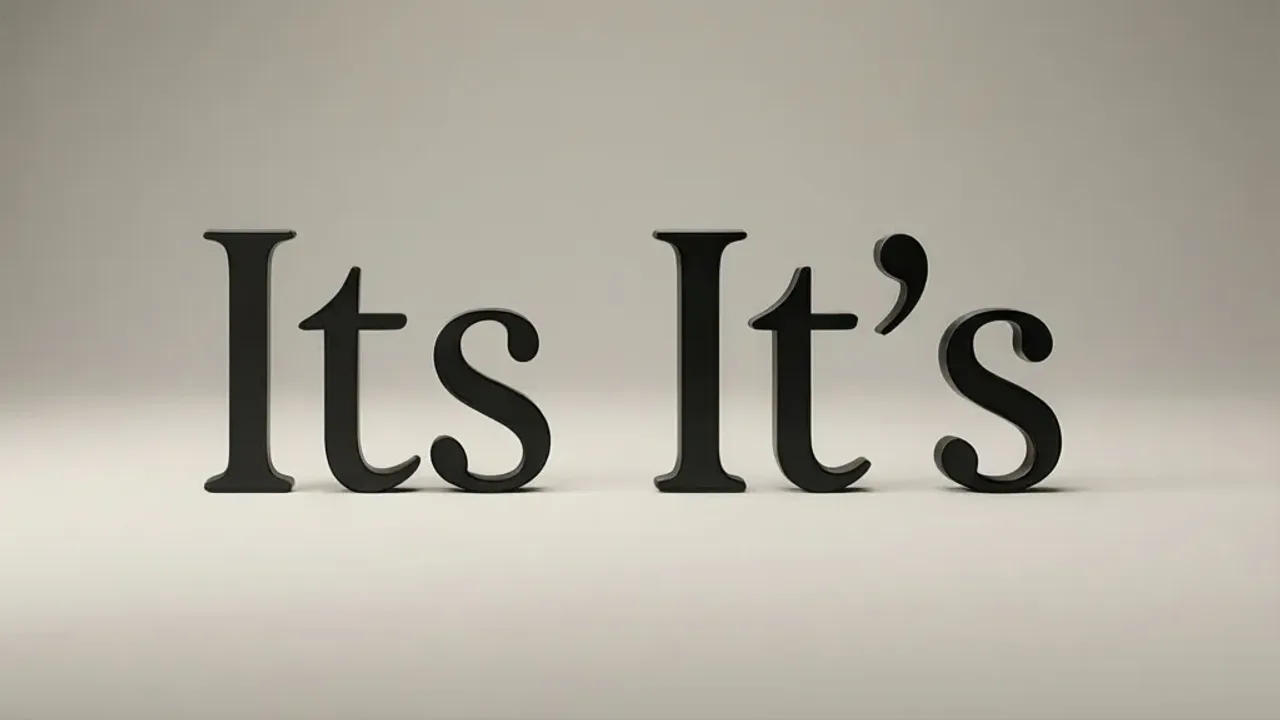 AI-generated image
Key Takeaways:
- "Its" indicates possession, whereas "it's" acts as a contraction for "it is" or "it has."
- The primary difference is the presence of an apostrophe in the contraction form.
- You can verify the correct usage by expanding "it's" to "it is" or "it has."
- Possessive pronouns like "its" never require an apostrophe.
| Feature | Its | It's |
|---|---|---|
| Grammatical Role | Possessive determiner | Contraction |
| Expanded Form | Not applicable | "It is" or "It has" |
| Apostrophe Usage | No apostrophe | Includes an apostrophe |
| Primary Function | Showing ownership | Shortening a phrase |
Understanding "Its" as a Possessive
The term "its" functions as a possessive determiner. It indicates that something belongs to an object, animal, or entity. It works like "his" or "her." It needs no punctuation. Use it in sentences such as "the software updated its interface" or "the bird flapped its wings."
Possessive pronouns are a unique category in English grammar. Unlike nouns, which require an apostrophe to indicate possession, pronouns have their own specific forms. Think of words like "yours," "ours," and "theirs." These words demonstrate ownership without requiring any extra punctuation marks. "Its" fits perfectly into this group. It is the possessive form of the neutral pronoun "it."
A common error is to treat "its" like a singular noun. For example, people often write "cat's" if they want to say something belongs to a cat. Because of this, it is tempting to write "it's" for possession. However, that is incorrect. You must leave the apostrophe out when talking about ownership.
Understanding "It's" as a Contraction
The term "it's" is strictly a contraction. It serves as a shorthand for "it is" or "it has." The apostrophe is required here to mark omitted letters. For example, "it's sunny" means "it is sunny." Similarly, "it's been a long day" means "it has been a long day."
Contractions are standard in both spoken and written English. They help make language more conversational and efficient. When you use an apostrophe in "it's," you are signaling to the reader that you have combined two words. It is essentially a visual shortcut.
Consider the difference in these two sentences: "The dog wagged its tail" versus "It's wagging its tail." The first uses the possessive "its" because the tail belongs to the dog. The second starts with "it's" because it stands for "it is." The distinction is clear when you read the words aloud.
How to Choose Between Its and It's
You can ensure accuracy when considering its vs it's by following simple steps:
- Replace the word with "it is" or "it has."
- If the sentence remains logical, use "it's."
- If the result is nonsensical, use "its."
- Never add an apostrophe to "its" for ownership.
- Check the context of the sentence to ensure it refers to an object or animal.
- Read the sentence aloud to double-check flow and grammar.
This method is foolproof. If you ever feel stuck, just perform the expansion test. If the sentence sounds wrong after you expand it, you are likely looking for the possessive form. It is a quick and effective way to clean up your writing without needing to memorize complex rules.
Why these forms are confused
Confusion often occurs because apostrophes typically signal possession for nouns. Many writers mistakenly apply this rule to pronouns. However, "its" functions like "his" or "yours." These pronouns never take apostrophes for possession. The apostrophe in "it's" only marks a contraction.
English is a language full of exceptions. While the apostrophe-s rule is the standard for nouns, pronouns like "its" remain an exception. Learning this difference is a rite of passage for many writers. It is a small detail that has a major impact on professionalism.
Frequently Asked Questions
Can I use "its" for a person?
No. Use "his," "her," or the gender-neutral "their" for people. "Its" is strictly for inanimate objects, animals, or abstract concepts.
How can I verify the correct choice?
Expand the word into its full form. If "it is" or "it has" makes sense in the sentence, use "it's." Otherwise, use the possessive "its."
Does "it's" ever indicate possession?
No. The apostrophe in "it's" is exclusively for contractions. It is never used to indicate that something belongs to "it."
Are there exceptions to these rules?
No. These are standard rules in English grammar. "Its" is always possessive, and "it's" is always a contraction.
Why is "its" different from possessive nouns?
Pronouns follow their own rules. "Its" behaves like "ours" or "yours" rather than "cat's" or "dog's."
To navigate its vs it's correctly, always attempt to expand the contraction. If the expansion makes sense, use the apostrophe; otherwise, use the possessive form. Using these terms accurately will improve your writing clarity significantly.
Share: