375 milliliters is equal to 12.68 fluid ounces in the United States customary system. Many individuals searching for 375 ml to oz require this information for accurate liquid measurement in cooking, baking, or beverage service. It is a common conversion used to ensure recipe precision.
ConvertersOctober 23, 2026
375 ml to oz: 12.68 Fluid Ounces Conversion Guide
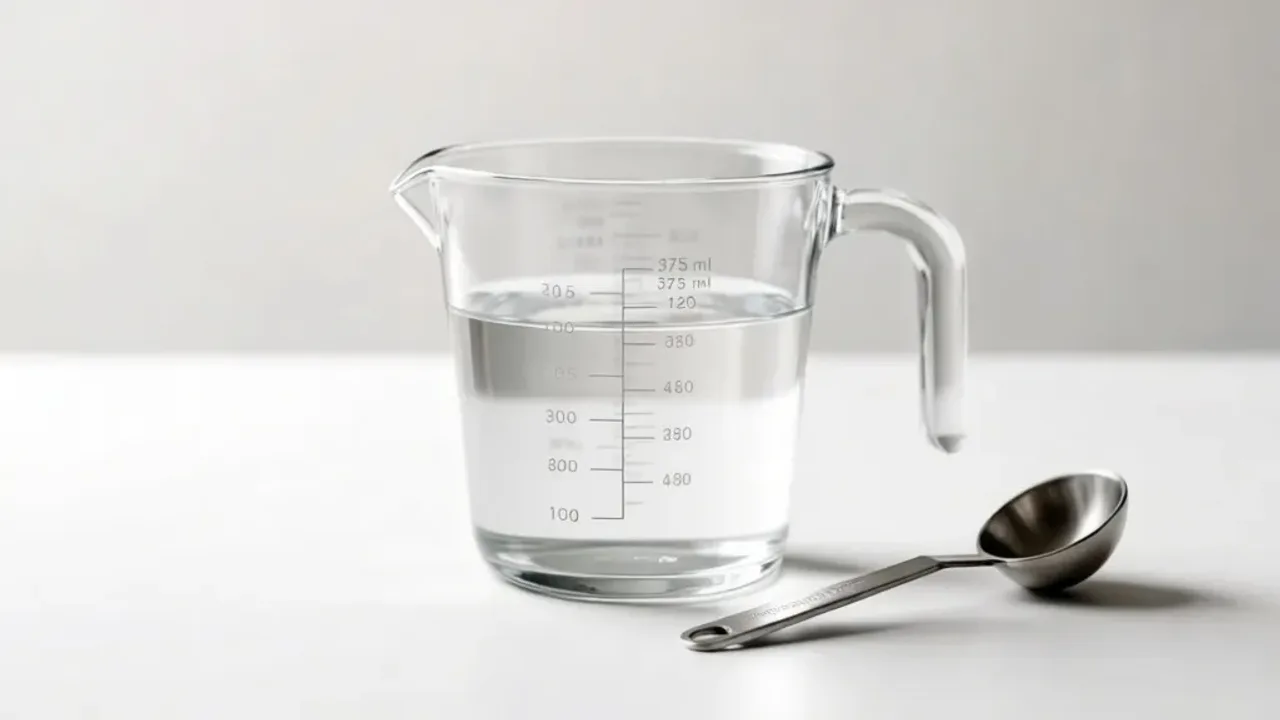 AI-generated image
Key Takeaways:
- 375 milliliters converts to approximately 12.68 fluid ounces.
- Use the conversion factor of 0.033814 for consistent accuracy.
- Standard half-bottles of wine typically contain exactly 375 ml.
- Volume measurements remain consistent regardless of the liquid type.
Conversion formula and results
To convert milliliters to fluid ounces, you must multiply the volume in milliliters by 0.033814. Since 1 milliliter equals approximately 0.033814 fluid ounces, multiplying 375 by this factor yields 12.68 fluid ounces. This calculation provides a reliable standard for liquid volume adjustments in both domestic kitchens and commercial settings.
When you perform a 375 ml to oz conversion, you are essentially translating metric volume into the common US customary scale. This process is essential for those who follow international recipes but utilize equipment calibrated for fluid ounces. Understanding this relationship helps avoid errors when scaling recipes or preparing drinks. Precision matters.
| Volume (ml) | Volume (fl oz) |
|---|---|
| 100 ml | 3.38 fl oz |
| 250 ml | 8.45 fl oz |
| 375 ml | 12.68 fl oz |
| 500 ml | 16.91 fl oz |
| 750 ml | 25.36 fl oz |
| 1000 ml | 33.81 fl oz |
Practical application for measurements
Understanding this volume is essential for accurate liquid handling. Consider these points when measuring ingredients or beverages at home:
- Verify liquid density if performing conversions by weight, as volume measurements are specific to fluid displacement.
- Use standard measuring cups clearly marked for both metric and customary units to ensure the highest level of accuracy.
- Always check the container label, as manufacturers may round 12.68 fl oz to 12.7 fl oz for packaging simplicity.
- Keep your measuring tools clean to prevent residue from affecting the final volume.
Follow these steps to maintain precision in your daily measurements:
- Confirm the total volume in milliliters listed on the product container.
- Apply the 0.033814 multiplier to get the fluid ounce equivalent.
- Round your result to the nearest hundredth for standard culinary tasks.
- Double-check the scale if the recipe demands high precision.
Frequently Asked Questions
Is the conversion the same for all liquids?
Yes. The conversion from milliliters to fluid ounces is a measure of volume and remains constant for any liquid. While liquids vary in density and weight, their volume displacement in milliliters will always result in the same fluid ounce value. It is straightforward.
Why is 375 ml a common size for containers?
This volume is widely recognized as a "half-bottle" size, particularly in the beverage industry. It offers a convenient portion size that serves roughly two glasses, making it a favorite choice for smaller gatherings or tasting events.
How precise is the 12.68 fl oz figure?
The value of 12.68 fluid ounces is a rounded decimal suitable for most everyday kitchen or commercial applications. For highly technical laboratory work, one might use a more precise coefficient, but 12.68 is the standard representation for this milliliter count.
Can I use a standard kitchen scale for this conversion?
Kitchen scales usually measure weight in grams or ounces, whereas 375 ml is a volume measurement. Unless the liquid has a density of exactly 1 gram per milliliter, like water, volume and weight will not be identical. They are different metrics.
Are there variations in how fluid ounces are defined?
The conversion provided here follows the United States customary fluid ounce, which is defined as 1/128th of a US gallon. This is the standard measurement used across the United States for consumer goods and commercial labeling. Consistency is key.
To perform a 375 ml to oz calculation, simply multiply your volume by 0.033814 to reach 12.68 fluid ounces. Always ensure you are measuring volume rather than weight to maintain consistent accuracy in your results.
Share: