There are many distinct fish that start with e, ranging from the powerful electric eel to the vibrant emperor angelfish. These aquatic species exhibit diverse behaviors and anatomical features across various marine and freshwater environments.
Word ListsNovember 4, 2026
Fish That Start With E: A Complete List of Species
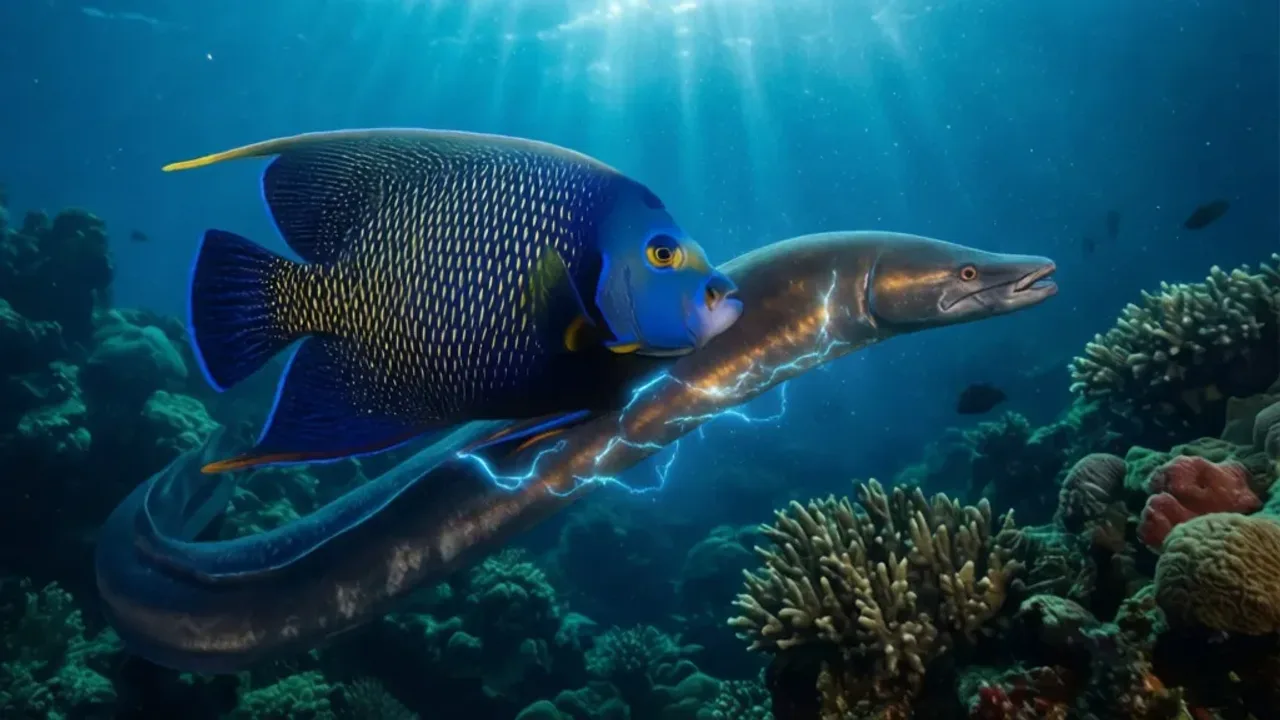 AI-generated image
Key Takeaways:
- The category of fish that start with e includes species like the European eel and the elephantnose fish.
- Many of these aquatic creatures possess specialized biological adaptations for navigation, such as electrical fields.
- When researching fish that start with e, verify their specific natural environment to understand their needs.
- Taxonomic classification helps distinguish unrelated species that share the same starting letter.
Educational Fact Sheets
Understanding the variety of fish that begin with this letter requires looking at individual species profiles. Each animal has developed unique survival strategies over millions of years of evolution. The diversity among these creatures is vast and offers a window into the complexity of aquatic life across the globe.
- The Electric Eel is not a true eel but a knifefish capable of generating powerful electrical shocks for hunting.
- The European Eel undergoes a remarkable migration, traveling thousands of miles from freshwater rivers to spawn.
- Emperor Angelfish are known for their vibrant color patterns, which change as the fish matures.
- Eosichthys is an extinct genus of prehistoric fish that provides scientists with insights into early vertebrate evolution.
- The Elephantnose Fish uses a specialized organ in its tail to produce weak electric fields.
- Eelpouts are deep-sea dwellers adapted to extreme pressure and cold temperatures.
- Etrumeus, or round herrings, are schooling fish that play a critical role in the marine food web.
- Epinephelus, or groupers, are large, robust fish found inhabiting coral reefs and rocky crevices.
- Eagleray species, such as the spotted eagle ray, possess wide wing-like fins for graceful movement.
- Eartheater cichlids are known for their unique method of sifting through river substrate to find food.
Taxonomic and Physical Comparison
Comparing these species highlights the biological differences between them. While some share common names, their physical characteristics vary widely. The table below provides a snapshot of some of the most recognizable species in this category.
| Species | Common Name | Average Length |
|---|---|---|
| Electrophorus electricus | Electric Eel | 2 meters |
| Anguilla anguilla | European Eel | 0.6 to 1.5 meters |
| Pomacanthus imperator | Emperor Angelfish | 0.4 meters |
| Gnathonemus petersii | Elephantnose Fish | 0.2 meters |
| Zoarces viviparus | Viviparous Eelpout | 0.3 meters |
Research and Identification Steps
Proper identification is essential for researchers and aquarium enthusiasts alike. When studying aquatic life, precision is key. Follow these steps to ensure accuracy.
- Confirm the taxonomic classification to ensure accurate identification.
- Review the geographic distribution to determine if the specimen is native to your region.
- Check the current conservation status as defined by the IUCN.
- Examine the feeding habits to understand how the animal interacts with its ecosystem.
- Observe behavioral patterns in the natural environment.
- Consult verified scientific databases for morphological details.
Creative and Playful Profiles
Each species has a personality. These profiles capture the spirit of these animals in their natural settings.
- The Electric Eel is the shocking superstar of the Amazon.
- Dressed in gold and blue, the Emperor Angelfish is the monarch of the reef.
- With a trunk-like nose, the Elephantnose Fish is a curious river investigator.
- The European Eel is a world traveler crossing vast oceans.
- Eelpouts are the cozy homebodies of the deep sea.
- Round herrings are the synchronized swimmers of the ocean.
- Groupers are the gentle giants of the reef.
- Eastern Mosquitofish are tiny but tough little swimmers.
- Emerald Wrasse are the jewels of the marine environment.
- Exocet flying fish are the acrobats of the surface.
Concise Taxonomic Summaries
Classification is the foundation of biology. These summaries provide the basic lineage for common species.
- Electrophorus: Kingdom Animalia, Phylum Chordata, Class Actinopterygii.
- Anguilla: Kingdom Animalia, Phylum Chordata, Class Actinopterygii.
- Pomacanthus: Kingdom Animalia, Phylum Chordata, Class Actinopterygii.
- Gnathonemus: Kingdom Animalia, Phylum Chordata, Class Actinopterygii.
- Zoarces: Kingdom Animalia, Phylum Chordata, Class Actinopterygii.
- Etrumeus: Kingdom Animalia, Phylum Chordata, Class Actinopterygii.
- Epinephelus: Kingdom Animalia, Phylum Chordata, Class Actinopterygii.
- Gambusia (Eastern Mosquitofish): Kingdom Animalia, Phylum Chordata, Class Actinopterygii.
- Thalassoma (Emerald Wrasse): Kingdom Animalia, Phylum Chordata, Class Actinopterygii.
- Exocoetidae (Exocet): Kingdom Animalia, Phylum Chordata, Class Actinopterygii.
Biological Adaptations and Survival
Surviving in the water is a monumental task. Many species have evolved specific traits to handle their natural environment. The pressure of the deep sea requires specialized physiology. Conversely, shallow reef inhabitants rely on complex color patterns. These adaptations define their success.
Deep-Sea Life
The abyss is dark. Eelpouts thrive here. They manage the cold. Their bodies are built for pressure. It is a harsh world. Few animals survive there.
Frequently Asked Questions
Are all these animals actually eels?
No. Many species like the Emperor Angelfish are not related to true eels. Naming often relies on appearance. Check FishBase for details.
Do all these species live in the marine environment?
While many reside in marine settings, others occupy freshwater systems. Some species move between water types. See NOAA for migration patterns.
Which of these species is the largest?
The Electric Eel is one of the largest. It can exceed 2 meters in length.
Where can I find information on conservation status?
The IUCN Red List maintains global records. Refer to their database for current information.
How do these animals navigate their natural environment?
Some species use specialized organs to generate electric fields. This helps them hunt in dark waters. Nature is amazing.
Are they hard to identify?
Taxonomy can be complex. Consult expert guides. It takes time.
Do these fish have teeth?
Most predatory species have teeth. Groupers use them for gripping. It is a survival tool.
Summary
Exploring these aquatic species reveals complex evolutionary adaptations in nature. Use reliable taxonomic records to monitor their conservation status accurately.
Share: